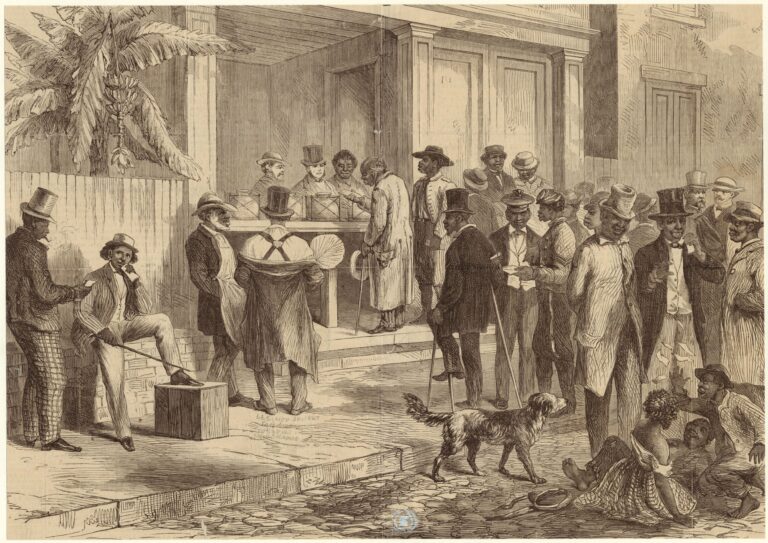
A City Cannot Repair What It Refuses to Stop Doing
Reparations must do more than compensate for past harm. Cities must also change the institutions that continue to produce displacement—and give Black communities greater power over what comes next.
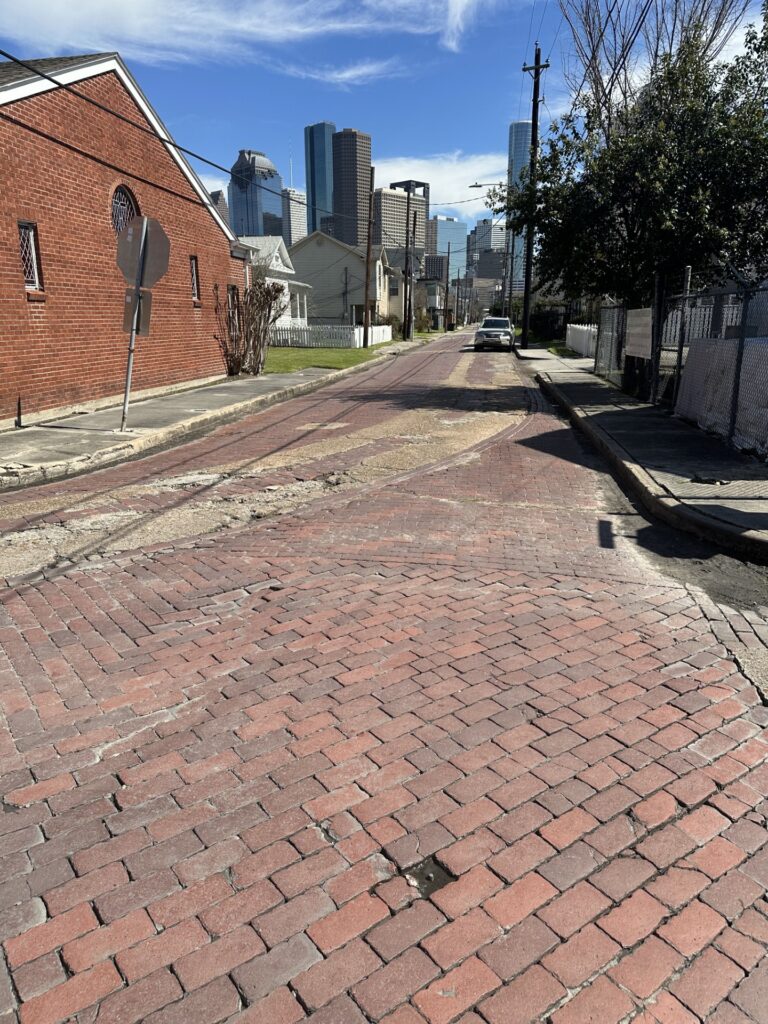
In Houston’s Freedmen’s Town, the bricks still speak. They tell the story of formerly enslaved people who built a community after emancipation, laying streets by hand and creating homes, churches, businesses, and institutions in a city that offered Black residents little security. Today, much of what they built is gone—roughly 79 percent of the neighborhood’s historic structures have been demolished since 1985. What remains carries an important history, but it remains vulnerable to many of the same pressures that erased so much of the neighborhood in the first place.
In 2021, Houston designated Freedmen’s Town as its first Heritage District, and recent partnerships have catalogued and protected thousands of its historic bricks. These efforts matter, but their reach is limited. The Heritage District designation largely governs public rights-of-way. It lacks any additional funding, land protections, or the safeguards against displacement and speculative development that long-term residents need. Houston has found ways to commemorate Freedmen’s Town without fully securing its future.
That contradiction belongs at the center of any serious discussion of municipal reparations. That question is increasingly being taken up at the municipal level. As Congress neglects the establishment of a national reparations commission, cities such as Evanston, Boston, and Chicago have created programs, task forces, and formal study processes to determine what repair should look like locally. What does repair mean when the city helped produce the injury? What does compensation accomplish if the policies, investments, and development pressures responsible for that loss continue to operate? A city cannot repair what it refuses to stop doing.
Municipal reparations are often reduced to an apology or a cash payment. Both can matter, but neither is enough if the same communities remain vulnerable to displacement, unequal investment, policing, or the loss of land. Repair has to address what was taken and confront the institutions and policies that continue to reproduce harm. That means establishing a public record, restoring resources where possible, ending harmful practices, and creating protections that last beyond a single administration. It also means giving affected communities meaningful authority over the land, institutions, and investments intended to shape their future.
This broader view is visible in federal reparations efforts. Sheila Jackson Lee spent years advancing H.R. 40, now led in the House by Representative Ayanna Pressley, through the federal commission bill. Cori Bush’s 2023 Reparations Now resolution framed reparations around compensation, restitution, rehabilitation, satisfaction, and guarantees of nonrepetition, while Representative Jasmine Crockett has pushed for a national truth, racial healing, and transformation commission. Together, these efforts treat reparations as more than payment by linking material redress to institutional change and protection against future harm.
Compensation still matters. Racial dispossession created material losses that accumulated across generations: wages that were stolen or suppressed, homes and land that lost value or were taken altogether, credit that was denied, and wealth that families never had the opportunity to build or pass down. Financial redress is therefore part of repair. But compensation alone leaves the underlying structure untouched. Reparations must also confront the public decisions and institutions that continue to produce dispossession. The task is to account for what happened in the past while changing the conditions under which Black communities live now and the authority they have over what comes next.
Cities build futures
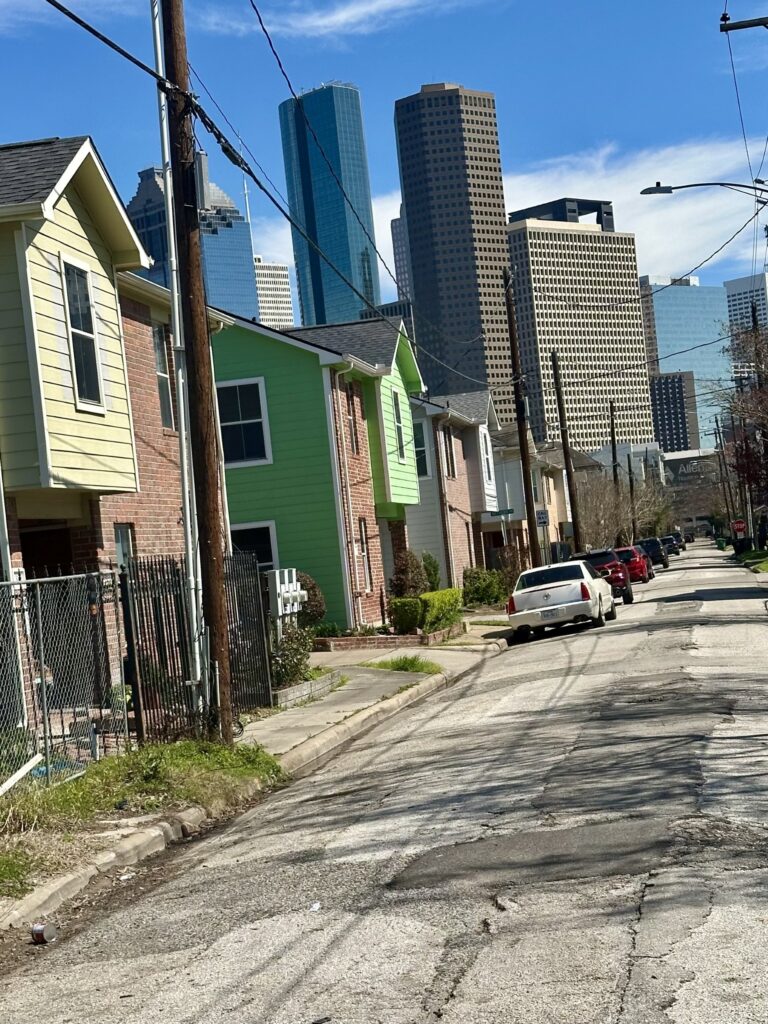
The future is often described as if it simply arrives. Cities, however, make decisions every day that shape what becomes possible and for whom. Zoning determines what can be built and who can afford to remain. Highway routes determine which neighborhoods are disrupted for the sake of regional mobility. Tax incentives direct public resources toward particular forms of development, while decisions about drainage, transit, schools, policing, code enforcement, and public land distribute security and risk unevenly. These decisions distribute more than infrastructure and services. Over time, they help determine whose communities are protected, whose are exposed, and whose claims to the city carry weight.
American cities did not merely inherit racial inequality. Local governments helped produce and maintain it. Municipal boundaries, restrictive housing practices, urban renewal, highway construction, unequal infrastructure, land-use regulation, predatory finance, and selective enforcement translated racial hierarchy into the physical and economic structure of metropolitan life. The effects can be seen in property values, access to public services, commute times, environmental risk, and the wealth families are able to accumulate. Even when federal policy supplied the money or authority, local governments often determined where projects went, which neighborhoods received investment, and which communities absorbed their costs. As Jessica Trounstine documents in Segregation by Design, racial and economic segregation has been produced in significant part through the ordinary powers of local government.
Black futures are already taking shape through decisions about land, infrastructure, housing, public spending, and political authority. Reparations should be understood within that process. They should expand the resources and governing capacity available to Black communities rather than define them primarily through injury. The aim is greater authority over the places where they live and the futures being built around them.
That changes what should count as repair. A grant may help individual households, but its effects are limited if rising taxes, deteriorating infrastructure, or speculative acquisition continue to push families out. Preserving a cultural marker matters, but preservation becomes thin when the community associated with that history loses control of the surrounding land. Even public investment can reproduce displacement when improvements increase property values and costs without protecting existing residents. Public investment is not reparative if the people who bore the costs of earlier development cannot remain and share in the value that new investment creates.
Pieces of a reparative city
No American city offers a complete model, but Baltimore and Chicago show what parts of a reparative infrastructure can look like. Maryland directs a share of adult-use cannabis tax revenue into a Community Reinvestment and Repair Fund for communities disproportionately harmed by cannabis enforcement, while Baltimore created a community commission to help guide how those resources are distributed. Although this policy does not settle a broader reparations debt, it shows how public revenue can be redirected toward communities damaged by public policy.
Chicago offers a different example. Its 2015 reparations package for survivors of police torture combined financial payments with counseling, educational benefits, a formal apology, a public memorial, and a curriculum on the history of police torture. The city has also invested in community wealth-building models, including worker cooperatives, community land trusts, and limited-equity housing cooperatives. In 2024, it created a Black Reparations Task Force to examine harm across housing, policing, incarceration, education, health, and economic development.
These efforts are incomplete, but they point toward a larger lesson: reparations must become part of how a city governs.
What municipal reparations would require in Houston
Houston does not begin from zero. The Houston Community Land Trust creates permanently affordable homeownership, while its Homebuyer Choice Program has helped eligible households purchase homes. The Houston Fund for Social Justice and Economic Equity has directed philanthropic resources toward businesses and organizations led by people of color. Heritage and conservation districts and Complete Communities provide other tools for preservation and neighborhood investment. What Houston lacks is a framework that connects documented public harm to an enforceable public remedy.
That should begin with documenting the historical record. A municipal truth and harms commission must document the city’s historic role in land loss, highway construction, urban renewal, unequal infrastructure, housing discrimination, policing, environmental exposure, and the destruction of Black cultural sites. Residents of historically Black neighborhoods, including people who were displaced, should have a formal role in that process. Its findings should also lead somewhere: City Council should be required to consider a remedy plan rather than allowing documentation itself to become the outcome. The commission’s record would provide the evidence needed to connect particular city actions to particular harms and design remedies around Houston’s own history.
Houston would also need a continuing source of funding. City appropriations could be supplemented by contributions from institutions that benefited from documented practices and revenue associated with public land or development. Direct compensation should remain available where specific victims, families, or descendants can be connected to documented losses. At the same time, collective investments could address land retention, home repair, heirs’ property, foreclosure prevention, and the preservation of churches, businesses, cultural spaces, and other institutions that anchor Black neighborhoods. In Freedmen’s Town, preserving the bricks should also mean protecting the people and institutions that give them meaning.
Repair also requires changing how future development occurs. Major public projects in historically Black neighborhoods should undergo a racial and displacement impact assessment before approval. Where displacement risks are clear, public investment should be paired with affordable housing, right-to-return policies, preferences for people with historic ties to affected neighborhoods, protections for existing businesses and residents, and enforceable community benefit agreements. Those commitments should carry consequences. If developers receive public subsidies in exchange for affordable housing, local hiring, or community investment, those obligations should be measurable and enforceable. Failure could trigger penalties, subsidy clawbacks, or limits on future city assistance. Residents should also have a role before major development decisions are settled, not simply be invited to comment afterward.
Public spending provides another opening. Houston can use contracting, workforce programs, and support for cooperative ownership to keep more of the value created by public investment within affected communities. Reparative spending should build the capacity to hold onto that value rather than watch it flow elsewhere.
The legal design cannot be an afterthought. Race-conscious government action faces strict judicial scrutiny. In July 2026, a federal judge blocked Houston’s minority- and women-owned business contracting program, finding that the city had not established sufficiently specific evidence to support its approach. That makes the historical record especially important. Houston would need to connect its own actions to present harms and design remedies around that evidence, including alternatives where the law limits explicitly race-conscious policy.
Ultimately, municipal reparations would have to change how the city governs. Departments implicated in documented harms should face public benchmarks and independent review, and future decisions about land, infrastructure, subsidies, and development should be evaluated against the possibility of repeating those harms. Repair would then become more than what Houston gives in response to its history. It would also shape what the city does differently going forward.
Building the freedom to remain
Houston cannot close the national racial wealth gap by itself, and municipal action cannot discharge the federal debt for slavery and its afterlives. But that limitation does not erase the city’s own obligations. Houston controls land, budgets, infrastructure, preservation tools, contracts, and development agreements. It can identify the harms attached to those powers and build remedies at the same scale.
The goal is not to freeze Black neighborhoods in the past or turn them into museums. It is to make them places where Black people can remain, return, create, own, govern, and thrive. That requires money, land, and durable institutions. Historical truth matters, but so does the authority to shape what comes next. It requires recognizing the alternative worlds Black communities are already building—in land trusts, cooperatives, mutual-aid networks, cultural institutions, and other experiments in collective ownership and care. These practices matter because of what they accomplish now and, more importantly, for how they expand what people can imagine. They make other ways of owning land, caring for one another, and governing community visible in the present.
Derrick Bell’s “The Afrolantica Awakening,” a speculative allegory in Faces at the Bottom of the Well, offers a useful lesson here. Bell imagines the sudden appearance of Afrolantica, a new landmass that gives Black Americans the possibility of building a life outside of the United States. The possibility itself changes how the existing world can be seen. Once another arrangement becomes thinkable, the present stops looking inevitable. Reparations can do something similar when they support institutions that allow people to live differently now, rather than simply promising a better future later.
The future is socially constructed. Each public decision rehearses a world, making that world more likely. Reparations should ultimately be judged by what they make possible for Black life: whether people can remain, hold land, exercise power, build institutions, and imagine futures beyond surviving the next threat of removal. If Houston is serious about repair, it must do more than honor what Black communities built. It must help return the power to build the future—and stop destroying the conditions that make that future possible.