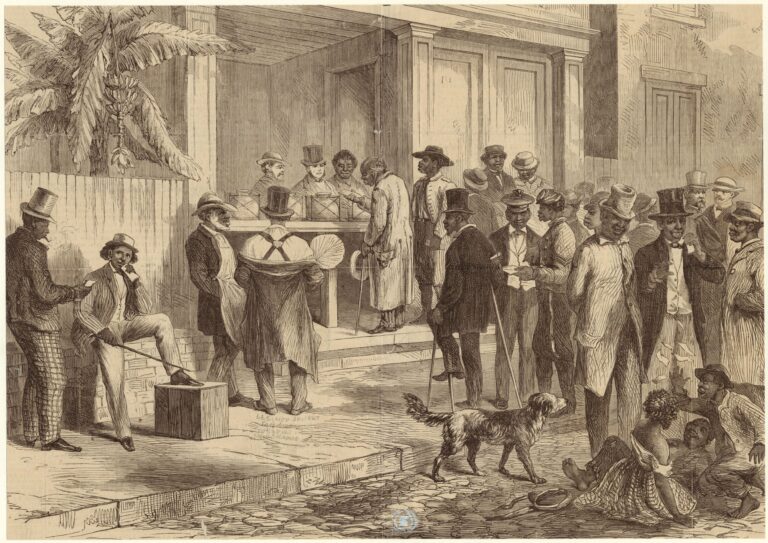
The Myth of Civilizational Erasure
How American universities are pushing to make Western Classics a bulwark of white identity politics and bending the knee to MAGA.
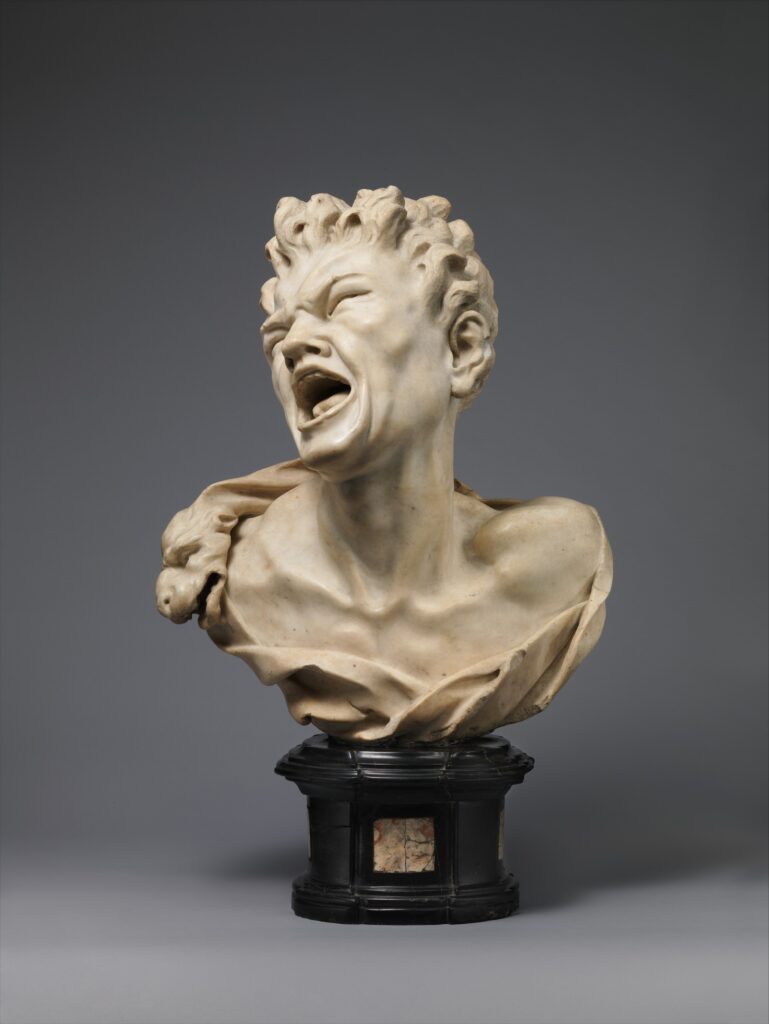
American higher education is embracing the Classics. Flagship state schools have in recent years established institutes focusing on Classics, or, more precisely, “Western Classics.” These include the Hamilton School for Classical and Civic Education at the University of Florida, the School of Civic Leadership at the University of Texas at Austin, and the School of Civic Life and Leadership at the University of North Carolina at Chapel Hill, among others.
These programs claim to offer students “objective” instruction that promotes “civic leadership” and education for a “free society.” Yet it is no accident that they have emerged as the Trump administration has pivoted to framing immigration and other policy matters as an existential question of “Western civilization” and its ostensible demise. In short, they are meant to guard against the “civilizational erasure” supposedly being unleashed by Black and Brown immigrants.
These schools are pushing Western Classics at a moment when the number of people studying the subject in undergraduate and graduate programs has been in steady decline for years. Last week, Syracuse University eliminated its Western Classics major. Despite these discouraging numbers, these institutions are convinced they will increase enrollments and majors. More important, they contend that the study of this subject can end political division in the country and increase voter turnout.
Crucially, they aim to produce students who extol the values of Western civilization. Having rampaged across higher education under the guise of rooting out DEI under DOGE, the push to shore up the study of “Western civilization” aims at providing MAGA culture warriors an ideological foundation for the future.
Donald Trump, the Republican Party, and conservative think tanks have used racist and xenophobic rhetoric to mobilize white voters—and a growing number of non-white voters—to scapegoat immigrants, blaming them for rising housing costs and supposedly rigged elections. Republican representatives have demonized Muslims, in particular, as dangerous outsiders: Andy Ogles of Tennessee recently asserted that “Muslims don’t belong in American society.”
Republican politicians like Randy Fine of Florida have tried to portray Islamic law (sharia) as “a threat to Western Civilization” and falsely claimed that Muslim immigrants are introducing “foreign values to overtake our country’s legal system.” In Texas, Attorney General Ken Paxton has spread false rumors about Muslims planning a “sharia city,” and Senator John Cornyn has claimed that “Sharia Law is the antithesis of the rights, beliefs, and values that make Texas and America great,” adding that “we must root out and eradicate this existential threat to our way of life.”
Of course, none of these scare campaigns remotely capture the realities of Muslim life in America. In fact, Muslims have been in the Americas at least as long as Christians. Today, politicians such as Minnesota’s Attorney General Keith Ellison take their oaths on the Qur’an. In Ellison’s case, he used one owned by Thomas Jefferson, who in his own time imagined that Muslims could become American citizens. And in spite of these fearmongering campaigns, the United States and Western nations now home to thriving Muslim communities remain pluralistic societies that allow individuals from different nations to practice their own religion without fear of violence or persecution.
In the face of all evidence to the contrary, JD Vance has embraced the racist trope that non-Western cultures or, simply put, Black and Brown immigrants cannot assimilate. He has asserted that they reject “Western” and “American” culture and values such as Christianity, capitalism, and hard work and has falsely claimed that they engage in crime at higher rates than others.
The MAGA commitment to safeguard what the movement sees as “Western civilization” is not limited to mass deportations and its legal battle to end birthright citizenship. In November 2025, Trump’s 33-page US National Security Strategy document pledged that the foreign policy of the administration would seek to restore “Europe’s civilizational self-confidence and Western identity” at a time when European nations are supposedly facing “civilizational erasure” in the face of the arrival of Black, Brown and Muslim migrants.
Today there are already minority majority populations in California and Texas—as well as in American public schools across the country. Yet, despite the increased number of non-Europeans in Europe and the growth of minority populations in the US, both remain very “Western” societies. Civilizational erasure is a myth.
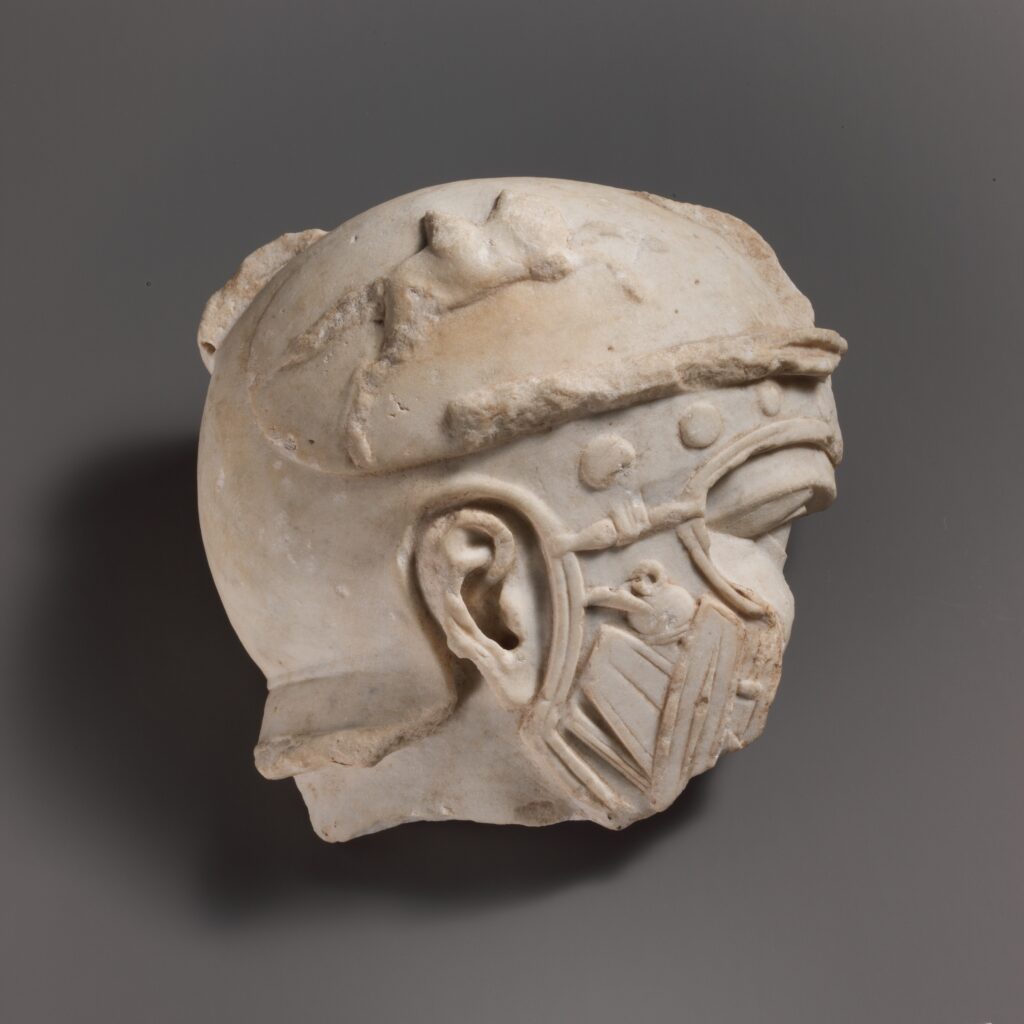
The effort to find in Western Classics a bulwark of white identity politics is not a new phenomenon. In 1987, Alan Bloom published The Closing of the American Mind: How Higher Education Has failed Democracy and Impoverished the Souls of Today’s Students. In 2001, Victor Davis Hanson and John Heath wrote Who Killed Homer: The Demise of Classical Education and the Recovery of Greek Wisdom. Bloom, Hanson, and Heath contend that the United States is part of the Western tradition and argue that to understand the unique intellectual traditions of the West, students must read Greek and Roman classics.
In a similar fashion, Arthur M. Schlesinger Jr. protested challenges to narratives of Western supremacy in his 1991 book The Disuniting of American: Reflections on a Multicultural Society: “It may be too bad that dead white European males have played so large a role in shaping our culture. But that’s the way it is. One cannot erase history.”
Schlesinger was correct about one thing: one cannot erase history. Yet historians also know that interpretations change over time. Many scholars who have celebrated the West have downplayed the racism of many European thinkers. As Dan El Padillia Peralta, a first-generation Dominican-born Classics professor at Princeton University, has shown, Western classicist scholars need to become more critical of Greek and Roman societies, reminding us that these were slave societies in which only elite males were allowed to vote. Much about the Greeks and Romans must be purposely forgotten or distorted in portraying “Western Civilization” as God’s gift to humanity.
Already in the late 1980s, scholars such as Molefi Kete Asante, African American Studies Professor at Temple University and founder of the first African American Studies Ph.D. Program, and Edward Said, Professor of Comparative Literature at Columbia University, and others critiqued the provincialism, racism, and hubris of scholarship uncritically celebrating Western civilization. They challenged interpretations rooted in a Eurocentric perspective that centered the world around Western European history and culture. Asante opposed the notion that “Classics” meant exclusively a “Western tradition” and critiqued a body of scholarship that celebrated Greece and Rome while neglecting the Nile Valley civilizations.
The celebration of “Western Civilization” assumes its universality and superiority. Take the “classical music” of, say, Mozart and Bach, which should, of course, be more accurately called “Western classical music.” In 1993, a group of European scholars published a study purporting to show that listening to European classical music makes an infant more intelligent. Four years later, Don Campbell published The Mozart Effect: Tapping the Power of Music to Heal the Body, Strengthen The Mind and Unlock the Creative Spirit. Many Americans bought into this unproven theory, which rested on the idea that Western Classical music is superior to music from other civilizations and cultures.
Another example is ballet, which emerged as a European art form that requires what European males viewed as the “ideal body” for a dancer: slim, with blond, straight hair, and a small back side. African American ballerina Misty Copeland recounted how some people told her she did not have the correct body type to be a professional ballerina. “The norm” in professional ballet, she learned, was “that everyone wears pink tights and that’s representative of white skin.” African dance, by contrast, does not typically require a particular body type; it is inclusive, and everyone can participate. This does not mean African dance is better—just that culture and ideas about “civilization” are socially constructed.
Still, for all its parochialism, Western civilization is not going anywhere—and is not really at risk of “erasure.”
Migrants who decide to relocate to the West must become familiar with the dominant culture to become successful. Migrants readily adapt to speaking English in the United States and Great Britain, French in France, and German in Germany. In 2050, the United States will become a minority majority nation. But English will remain the main language, just as Christianity is likely to hold on as the religion of the majority. Moreover, most universities and colleges will continue to prioritize the study of Western Classics and intellectual traditions—unless students and faculty push to advocate studying non-Western societies, which make up the global majority.
Dr. David A. Canton is Associate Professor of African American Studies and History at the University of Florida.