The World Cup and the Black Diaspora
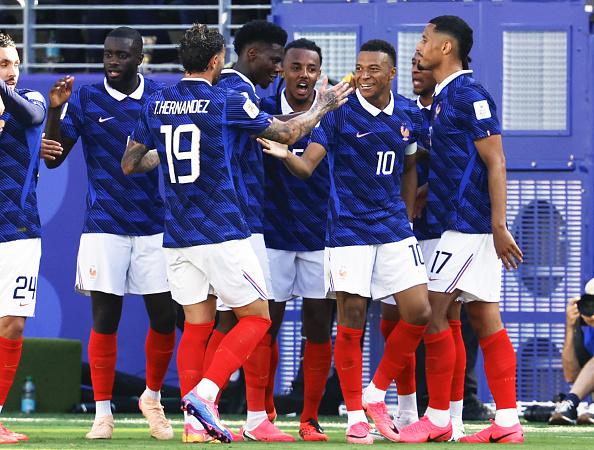
The 48 teams competing in the most-watched sporting event across the globe are a reflection of a changing world—of migration and colonial histories. Among the nineteen teams that identify as “Western” nations—Austria, Australia, Bosnia Herzegovina, Belgium, Canada, Croatia, Czechia, England, France, Germany, Netherlands, New Zealand, Norway, Portugal, Scotland, Spain, Sweden, Switzerland, and the United States—24% of their players are of African descent.
The prominence of Black athletes in the 2026 Men’s World Cup is rooted in previous success. For the 1998 World Cup, the French coach Aimé Jaiquit selected five men of African descent on a national team that included Zidane, whose parents were Algerian. They defeated Brazil 3 to nil and won Frances’s first World Cup.
In 2025, Les Blues feature 15 players of African descent, including the phenomenal superstar Mbappé. Similarly, England, which used to select only two to three men of African descent, now has 14 men, including the superstar Saka, whose parents emigrated from Nigeria.
Despite the elite skills of Saka, Mbappé, and other men of African descent, Black professional football players continue to face extraordinary obstacles in Europe, including having to play in front of racist crowds. There are numerous examples of stars such as Ebenezar Akinsanmiro, a Nigerian who plays for Inter Milan in Europe, hearing ape chants from the crowd.
In 2024, FIFA started the No Racism initiative. Players were supposed to be issued a red card (an immediate ejection from the match) for making racist remarks. While these efforts are commendable, they have not done enough to punish the racist fans.
Watching the World Cup is another reminder of the complicated place of race in imagining national identities in the West. This has become even more visible since the rise of conservative parties and far-right political ideologies and parties in the United States and Europe.
This summer multiracial teams are playing against the backdrop of increasingly powerful political movements who want to stop nonwhite immigration. Sixteen of the nineteen teams with players of African descent have far right parties that are against non-white immigration.
Across the West, the number of parties who lead with their anti-immigration stance is staggering. They include the Freedom Party in Austria, One Nation in Australia, Vlaams Belang in Belgium, the Conservative Party in Canada, Reform in England, the National Rally Party in France, Alternative for Germany, the Party for Freedom in Netherlands, Progress Party in Norway, First in New Zeland, Chega in Portugal, Reform UK in Scotland, Vox in Spain, Sweden Democrats in Sweden, Swiss People’s Party in Switzerland, and the Republican Party/MAGA in the United States, just to name the biggest ones. In each of these countries that we have long associated with “Western values,” there is no shortage of ideologues who would like to see the removal of all nonwhite people.
The World Cup is overlapping with another kind of global moment: the global far-right is under the spell of a racist idea that contends that “global elites” encourage Black and Brown immigrants to take jobs, electoral power, rights and privileges from hard working white people.
This idea attracted media attention in 2017 in the US when neo-Nazis marched in Charlottesville at a “Unite the Right” rally, carrying torches and chanting “Jews will not replace us.” However, as Ibram X. Kendi, the Dr. Carter. G. Woodson Endowed Chair at Howard University, notes in his new book, Chain of Ideas: The Origins of Our Authoritarian Age, the origins of this worldview can be traced to the popularization of the work of a French writer, Renaud Camus, who authored The Great Replacement in 2011 and You Will Not Replace Us in 2018.
The “Great Replacement Theory” is a growing ideology in right-wing, conservative parties in the United States, Europe, and Latin America, where its adherents blame Black and Bown immigrants for economic inequality and crime—and insist that these immigrants come from cultures and religious backgrounds that supposedly promote anti-Western values. Muslims must contend with yet another layer of suspicion.
However, when it comes to football—and the key role played by men of African descent, these same ideologues are more muted about “replacement.” Of course, white nationalists are not entirely happy with the current demographics of their national teams. In keeping with the crude theories of contemporary racial thinking, many believe that Black players have an “unfair” advantage due to their genetic makeup. This was true even in 1996, when the French far-right politician Jean-Marie Le Pen criticized the makeup of the national team, protesting that it was “artificial to bring in players from abroad and call them the French national team.” To underscore his disdain, he claimed most of them did not even know La Marseillaise, the national anthem.
Today, the World Cup highlights crucial contradictions in right-wing ideology. Cheering for a national team with star players whose race, and religious and cultural backgrounds they abhor, white nationalists must—at some level—recognize meritocracy when they see it. They may even discern the possibility of equality translating from the football stadium to the national political arena.
Moreover, football celebrity might have progressive political effects. Seeing the success of Black athletes could dampen racism. There are some football players such as Mbappé, who is using his platform to encourage French citizens not to vote for the racist and anti-immigrant National Rally Party.
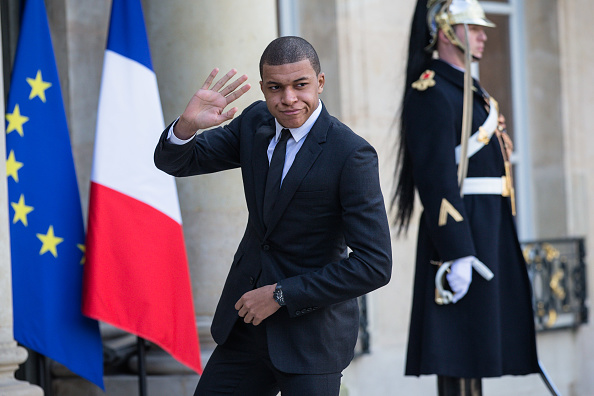
France is represented on football’s brightest stage by professionals who are at once immigrants and French citizens. Rather than “shut up and dribble,” Mbappé is using his voice to challenge far-right parties
There are still other lessons from the World Cup for other professional sports—and society—beyond football. They all touch on how we think about meritocracy.
American football and basketball in the US and cricket and football in Europe are professions where men of African descent are overrepresented. When asked, most whites will say sports is the purest form of meritocracy.
But echoes of older racist conceptions persist. African diaspora athletes can be “too” athletic. Antiquated views of biological difference can fuel still other narratives about “replacement.”
The World Cup is another stage for white supremacists to present themselves as “victims.”
Looking beyond football, these anxieties can help us understand how we think about “objective metrics” in other spheres across corporate America, the professions, and the academy.
No matter the score, our biases do not disappear. The goal post is not stationary.
You can be the most qualified applicant for any position. But, if you are Black, Muslim, trans, a woman, gay, obese, or fall into any other category for exclusion that one can imagine—but not admit—suddenly “objective metrics” lose all meaning.
In athletics, the goal post may not move for players—that is, until they apply to become head coaches and general managers where many run into the Black and Brown ceiling.
The World Cup provides people the opportunity to view the grandeur and pageantry of “The Beautiful Game.” But there is another part that reveals, at once, the beauty and grotesqueness of our modern conceptions of citizenship.
If you’re a person of African descent which team do you root for when France plays Senegal? Does a person cheer for Mbappé but also wants the French to lose because they despise the Far Right? Or, as a person of African descent, you might want the French team to win because it may persuade some white citizens that Black and Brown immigration is great for France.
However, if the French team loses, the Far Right will blame likely Mbappe. They will refer to him as Black or from Cameroon (where his father was born), and say the team lacked discipline (a racist euphemism that whites use to describe majority Black teams and style of play)—and then he’ll no longer be French.
Dr. David A. Canton is Associate Professor of African American Studies and History at the University of Florida.