‘Little by little, we’re realizing the true scale of human loss in El Salvador’
A conversation with Salvadoran journalist Julia Gavarrete on fascism, militarism, and tech-bro gentrification under Nayib Bukele’s indefinite ‘state of exception.’
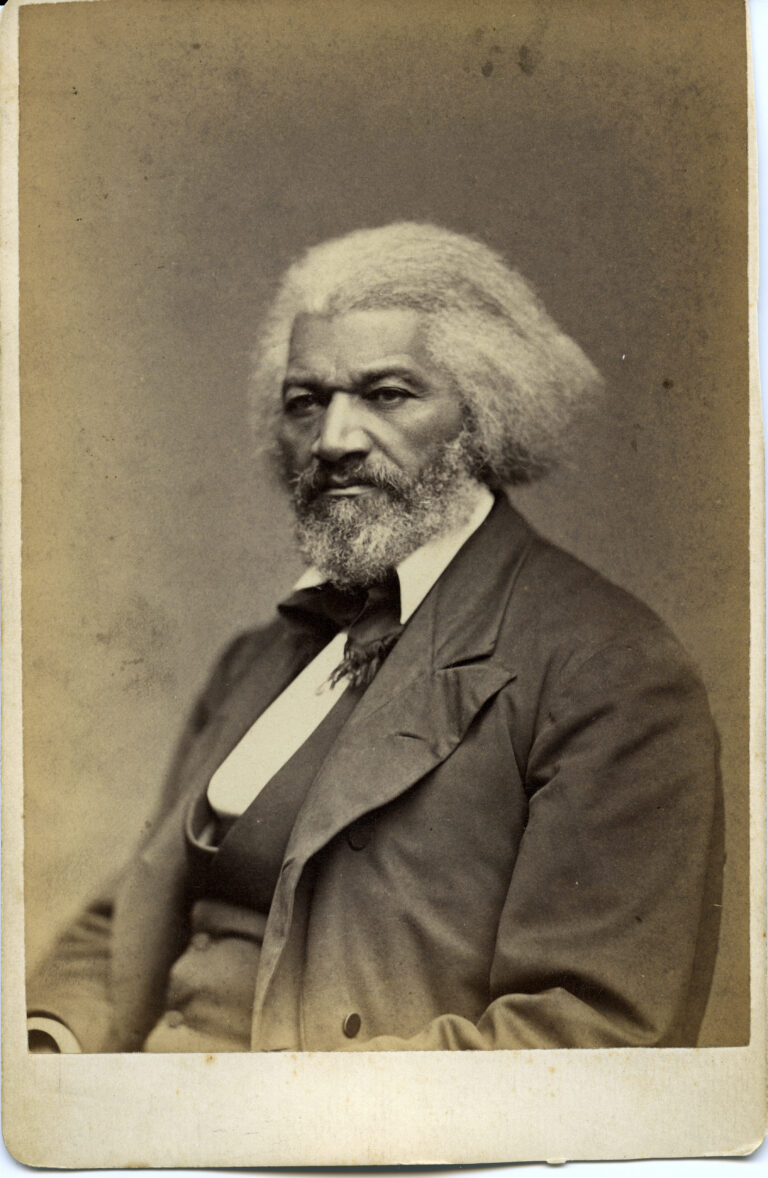
Julia Gavarrete is a Salvadoran journalist specializing in politics, migration, and human rights. In 2023, she won the prestigious Ortega y Gasset award for her story, “Una familia que no debe nada huye del Régimen de Excepcion” (“A Family with Nothing to Hide Flees from the State of Exception”). Gavarrete is a former member of the acclaimed Central American newsroom El Faro, and her work has been featured by CNN, The Intercept, Univisión and USA Today. In 2020, she contributed to the Emmy-award-winning feature “Las Niñas Suicidas de El Salvador” (“Girls are killing themselves in El Salvador”), and in 2019, she was featured in the International Women’s Media Foundation’s list of “19 Women Changing Journalism.”
The following interview has been translated from Spanish and edited for length and clarity.
What was it like to live and report under the increasingly authoritarian conditions in your country, and why did you and your colleagues ultimately decide to leave? Do you consider yourself in exile?
Unlike many of my colleagues, I don’t self-identify as an exile, because my situation is somewhat unique: I have a partner who lives in another country. If I didn’t, I still would have left, I think, but as it stands, my case has more to do with personal considerations. The situation in El Salvador is a factor, of course, in the sense that, for example, it’s no longer a country where I can safely practice or pursue a career in journalism—at least not under the conditions that we might expect a state to ensure. So obviously that makes me appreciate and take advantage of my ability to stay abroad, as I assess how the internal political situation in El Salvador develops.
We’re at a stage now where it’s extremely difficult to practice journalism in El Salvador. Even before the state of exception, we didn’t have access to information that’s supposed to be public—information we rely on to demand accountability or uncover corruption—and that itself has been a major limitation. It’s disappointing, when we consider all the progress the country had made in that direction. Then, Bukele started exerting even more control over state institutions. One of the effects of this was that sources became increasingly afraid to speak to journalists, especially after El Faro revealed that we were being spied on, which confirmed the fears of many of our sources, who had already suspected that their communications were being secretly monitored.
So these were some of the hallmarks of Bukele’s first years in power. And then came the state of exception, which dramatically escalated this climate of fear. Journalists now faced the possibility of indefinite detention without due process—we could be arrested, not necessarily for a crime related to journalism, but for whatever crime the state decided to fabricate—and we knew that there were no longer any institutions we could turn to, to defend ourselves against potential accusations. We knew from the beginning that the state of exception, which began as a strategy of gang control, would ultimately be used as a tool to arrest anyone, including journalists, without concern for due process.
Which is why so many of our colleagues at El Faro decided to leave—because they got wind that the regime was planning to arrest them…
Right, and if you look at that case, after El Faro published [an interview with former Barrio 18 gang leaders, revealing details of Bukele’s secret alliance with the gang], they received a message from a source informing them that the regime was preparing arrest warrants for seven newsroom staff, for charges including “apology for crimes” and “illicit association.” And with no more checks and balances in government—with Bukele in control of the entire state apparatus—there were no institutions that we could reliably turn to in the event of an arrest.
In a recent piece you wrote for Dissent, you open with the case of Ruth López, a prominent Salvadoran human rights lawyer detained by the Bukele regime since May. Do you know how many human rights defenders and dissidents have been imprisoned under the state of exception, and how many have fled the country?
I’m not sure what the exact number is now, but last year, I was working on a report with the Salvadoran human rights group Cristosal, and we documented numerous cases of human rights and land defenders arrested under the state of exception, as well as a significant increase in threats. [Cristosal’s report documents a 500% increase in threats against human rights defenders from 2019-2023]. On the question of exile, I spoke recently with a defender who fled the country just before Ruth López was detained, and she told me that yes, many others have also left, and have declared themselves in exile, including many environmental activists—but whatever numbers exist are likely a significant undercount, because so many cases go unreported. People often choose to keep a low profile to protect their families. We started noticing this after the Cristosal report came out: fewer and fewer defenders were reporting or speaking publicly about threats or possible arrests, because they were afraid their families would be targeted by the exception regime. So yes, many defenders have gone into exile, in addition to the 43 exiled journalists registered by the Salvadoran Journalists’ Association (APES). [A few days after this interview was conducted, APES shut down operations in the country and moved its legal registration abroad to avoid persecution under the regime’s new “foreign agents” law].
But many defenders and dissidents remain in the country, and many of them have not been detained—including some well-known and outspoken ones (I’m thinking, for example, of the land defender and anti-mining organizer Vidalina Morales, whom you interviewed in 2023). What do you make of the regime arresting some critics but not others—is Bukele acting with a certain degree of restraint to maintain plausible deniability against accusations of dictatorial overreach? Or have the threats and intimidation worked to his satisfaction, silencing critics and forcing activists to keep a low profile or leave the country?
I think it’s a combination of both factors. The detention of Ruth López and Enrique Anaya was a watershed moment and represented an opportunity for Bukele to pacify the movement and exert more control over the territory. My sense is that, with the most recent street demonstrations, the social movements were beginning to unify. Strategically, Bukele knew that if made these arbitrary arrests of key figures, it would have a ripple effect. Before those arrests, the social movements were already getting hit really hard, and many leaders, including trade unionists and people from historically organized communities, had already been arrested or were facing threats. This is what we’ve seen, for example, in the case of Cabañas, with the arrests of the leaders of ADES [the Santa Marta Economic and Social Development Association, a community organization working to prevent the return of metallic mining in Cabañas, a department of north-central El Salvador]. Basically, Bukele knows that by arresting key figures, he can deal a major blow to the movements.
As for Vidalina, I can’t confirm whether she’s still in the country because I haven’t spoken to her recently. What I do know is that, yes, most of the people involved in the environmental and anti-mining movement in Cabañas are still in the community and have no intention of leaving—they’re going to stay to defend their territory and carry on the resistance.
Going after high-profile movement leaders might otherwise have drawn criticism from the international community, which Bukele would want to avoid, but he did it at the most opportune moment, when the political landscape in the United States was shifting and he was aligning himself more with Trump. It was the perfect time to start making these kinds of arrests—there was also the divorce between Musk and Trump, and the Epstein case… Bukele knows he needs to take advantage of this moment, but he’s also moving cautiously, playing his cards carefully. I don’t think it will stop here. I don’t think that Ruth and Enrique are the only people that he’ll target.
That said, I think that social movements will continue to make demands, especially because we’re at the point now where, yes, there’s a lot of fear, because anyone can be detained at any moment, but there’s also a shared feeling among people who have endured the disappearance of a loved one, and this drives them to keep going. Even when they’ve lost the energy to fight, people will keep coming out to the streets to protest, and to demand that Bukele release the innocent.
Does Bukele still have broad popular support? How can his popularity be accurately measured when criticizing the president means running the risk of indefinite imprisonment?
I think when Bukele resorts to revving up his propaganda machine and boosting his public image, that’s when we know he’s facing a crisis. That’s when he’s the most vulnerable, either because he’s facing criticism or because one of his most emblematic projects has failed. We need to analyze the conjuncture carefully to understand his reactions. For example, when his response is to brag about his projects or, especially, to brag about himself, we know it’s because the Legislative Assembly is losing support or because the public image of his party’s deputies or mayors or local leaders is suffering. His strategy is always to boost his own image first, knowing that, from there, he can boost the image of his party.
The war on gangs is the basis of Bukele’s popularity. It’s the reason he still has such a high approval rating, because he’s given people the impression that everything in the country is under control, that there are no security problems, that there are no more problems with gangs. Even though people are suffering economically, they still support him because, ultimately, they’re afraid. People aren’t willing to return to the days when gangs controlled their neighborhoods and communities.
But the crucial question now is: what comes after this process that El Salvador is enduring? Especially since we know that the country’s economic problems are becoming more evident every day, and polling shows that the economy is overtaking security as the top concern of Salvadorans.
In recent weeks, Bukele has turned his attention to the country’s school system, appointed a military captain as education minister and rolling out an initiative to essentially militarize El Salvador’s public school system. Can you talk about what this has involved, and what impacts it’s having on students and teachers?
Bukele is resorting to the old tools that the military regimes of the past deployed to control students, by micro-managing how they dress and imposing all these militaristic rituals. I was in public school in the late 1990s, in the aftermath of the civil war and coming out of the peace accords, and everything we’re seeing now is a return to that era, when we had to line up on Mondays, sing the national anthem, recite the pledge of allegiance… All this renewed emphasis on patriotism is like a regression to that era, and what we’re seeing now is that it’s being used to instill fear in students, and teachers. For example, teachers who don’t report a student who shows up to school without a military haircut, or without clean shoes, or whatever, are being reprimanded or even fired.
Ultimately, what all this points to is the fact that Bukele’s goal isn’t to train professionals, it’s to indoctrinate people, and this indoctrination in turn serves to glorify the military, so that more and more young people, who have fewer and fewer professional opportunities in life, will opt to join the army. And why does Bukele care so much about the military? Well, because he doesn’t have an economic program, so the military is his primary tool for defending his political project. By getting the youth on his side and indoctrinating more and more people—well, it’s essentially what we’ve seen under other authoritarian regimes: Bukele wants to mold a new generation of citizens who are totally committed to defending what he hopes will be his many years in power.
Aside from opposition activists and journalists, who has the regime been targeting? In many if not most cases, the police seem to arrest people arbitrarily, with the exception that the majority of patrols and detentions take place in poor, working class communities, often with a history of gang control. Why do you think the regime has arrested so many innocent people, and what does this say about the motivations behind Bukele’s political project?
In terms of your first question—why are so many innocent people being arrested, especially in communities where gangs had a lot of control, but even in places with no history of gang control—I think the problem that people face under the state of exception is that there are so many different levels of abuse of authority… For example, we know there have always been direct orders from the president to set up military checkpoints and cordon off specific communities. But another problem is abuse of power on the part of the police, who have basically taken advantage of the state of exception to commit acts of personal revenge and settle scores. On top of this, everyday civilians have also realized that, under the state of exception, all it takes to denounce someone is a phone call accusing them of some specific crime, like extortion, and because everything is based on assumptions rather than due process, it’s easy to get the state to target someone you dislike or suspect of something, even without any proof of wrongdoing. This, in turn, has caused even more social conflict, as fear spreads through the communities—fear that, if I speak out against someone, they might take revenge and denounce me to the exception regime. Or, for example, if I say something to a police officer or give him a dirty look, he can arrest me on the spot because, well, he has the power to do so. So, I think this is a big reason we’ve seen so many arrests that are otherwise hard to make sense of—of students, or professionals with formal jobs, etc. There really is a widespread abuse of power at every level.
I don’t want to fall into the trap of making everything about the United States, but obviously there are some significant similarities and connections between Bukele and Trump, and the two regimes have grown increasingly close. What similarities do you see between their approaches to governance? Does it make sense to think of this era—in El Salvador, but also in the U.S. and globally, with so many other places experiencing the rise of fascism—as a rupture from prior modes of political and social organization, or as an escalation of already existing historical trends, like neoliberalism and the ‘War on Drugs,’ for example—or in the case of El Salvador, a return to the military regimes of the past?
People often say that Trump is trying to emulate Bukele, to replicate his strategy. I can’t say whether Trump wants to be exactly like Bukele; what I do know is that there’s a very well-worn manual—a set of tactics designed by the far-right in the hopes that they will be replicated in other places. It worked in El Salvador, so now we’re seeing a similar agenda implemented in the United States, Argentina, Ecuador, Peru, even Costa Rica. It’s a manual for seizing power, essentially, and it includes elements from other historical periods—the obsession with narrative control, for example—combined with those of other present-day closed regimes, like North Korea. The main difference is that Bukele has managed to adapt this manual to the information age. This has been one of his major successes: ensuring total opacity, keeping information that’s supposed to be public under wraps, locking it away so securely that even his own government officials can’t access it. This opacity is crucial in a context of digitization and the proliferation of data, and it has facilitated the success of the type of government he’s created.
Another layer to this strategy is narrative control: manufacturing a public enemy. In El Salvador, it was the gangs; in the United States and Europe, it’s migrants and refugees. Manufacturing an enemy facilitates the acceptance of extraordinary measures.
That said, it’s not so easy to adapt this model to just any country you want. There are institutional counterweights that prevent automatic replication. It succeeded in El Salvador for the simple reason that El Salvador really is a finca—a plantation. It’s such a small and volatile country, and it’s easy to manipulate the population because there’s such a lack of education, and because people have endured years of unending violence—they’re stuck in a cycle of violence that perpetuates exhaustion, hatred, and polarization. On top of this, institutions have historically failed to solve people’s problems. All of these factors work together to facilitate impunity, injustice, human rights abuses, etc.
Both inside and outside of El Salvador, we tend to see an emphasis on the positive aspects of Bukele’s governance; now, everyone wants to have their own Bukele. But several steps are required for this to happen—and opacity is undoubtedly one of the first. I remember, for example, when Trump started deporting Venezuelans to El Salvador, a U.S. journalist asked me if it was possible to obtain information on who was being sent to CECOT. I told her it would be easier to get that information from the United States than from El Salvador. In El Salvador, information is locked away, and is extremely difficult to access.
This, to me, is one of the more glaring ironies of the regime. Bukele paints himself as a daredevil entrepreneur breaking with political convention. His political party is literally called Nuevas Ideas (New Ideas). But nearly all of his ideas are almost cartoonishly retrograde—archaic, even: total state secrecy, imprisoning people in torture dungeons without trial, grandiose spectacles of military discipline, slavery as social control, etc. These aren’t new ideas; they’re quintessentially old ideas.
Yes. In fact, the historian Héctor Lindo has done a lot of work situating Bukele in the broader context of Salvadoran history and drawing comparisons to previous dictatorships—analyzing past military regimes and showing how each ruler exercised control through states of siege. This, he says, is how they managed to hold onto power for so long: by keeping people trapped in a permanent state of siege. Martínez did this for years, for example. Lindo almost never identifies Bukele with a specific historical figure, but emphasizes how his approach is more like piecing together a puzzle: it’s a process of cutting out the pieces from the past that he finds useful, then fitting them together. And not just from Salvadoran history, but drawing on historical figures from other parts the world as well—like Hitler, for example. So yes.
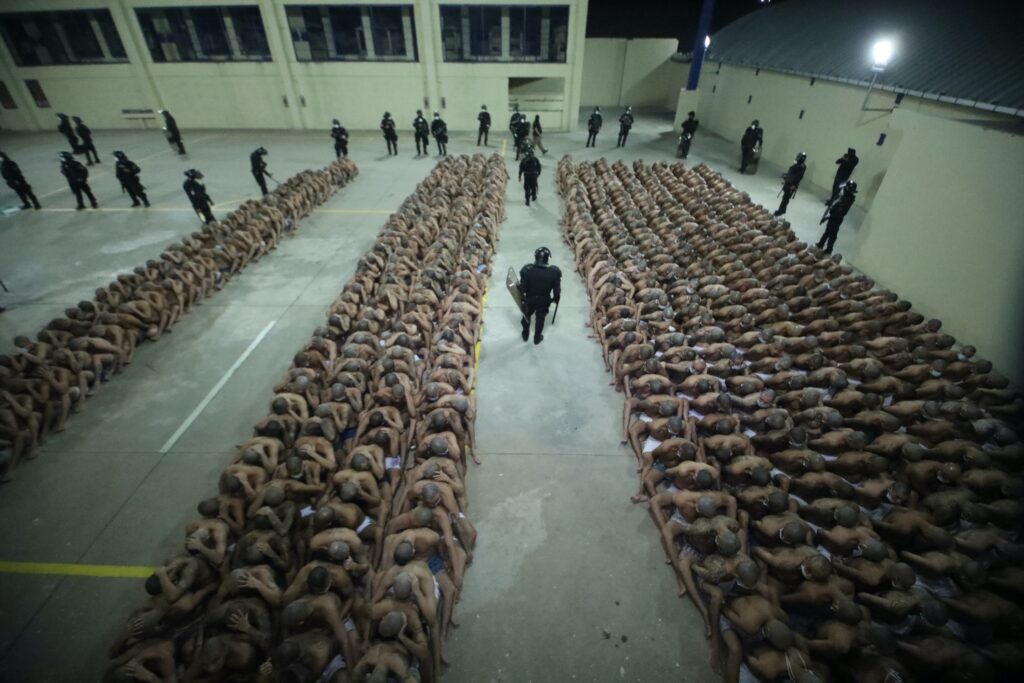
You mentioned CECOT (Bukele’s “Terrorism Confinement Center” mega-prison), which became somewhat of a household name in the U.S. after Trump made a deal with Bukele to imprison hundreds of Venezuelans in exchange for the U.S. dropping charges on senior MS-13 gang members and extraditing them to El Salvador, to prevent them testifying about Bukele’s secret gang alliances in U.S. court. But most people detained under the state of exception aren’t actually held at CECOT; they’re in other prisons around the country. What are conditions like in those other prisons, and how do they compare to what we know about conditions in CECOT?
Well, from what little we’ve been able to learn from the testimonies of people who have managed to leave the prisons alive, and from the work of human rights groups documenting the situation, the most abusive prisons, and those with the highest numbers of reported deaths, are Izalco and Mariona. The conditions described in these testimonies, which are really heartbreaking, include torture and limited access to health services [see also: this recent feature by El Faro]. Not only are people denied access to the medications that their own families attempt to deliver, they’re also denied treatments for chronic illnesses, which, of course, has a huge impact on the health and well-being of detainees. For example, there are cases of people who entered prison with well-managed cases of diabetes, but because they were refused medication, they ended up having limbs amputated in prison.
So, apart from all the torture, people also face a deterioration in health as a result of the terrible conditions in which they’re held. Overcrowding, poor nutrition, and the fact that food delivered by family members often doesn’t reach them—all of this further aggravates the situation. [In El Salvador, the state does not provide sufficient meals to prisoners; if families want their detained loved ones to eat, they have to deliver food themselves, or purchase meals from designated vendors, often at the expense of their own household’s nutritional needs]. This kind of mistreatment varies from prison to prison, but also depends on the whims of the individuals that families have to interface with when delivering packages and meals to their relatives. So, it’s not only a question of the conditions on the inside, which we know are inhumane, but also the situations faced by families who often confront compounding crises and are denied basic information on the condition, or even the whereabouts, of their detained loved ones.
Two years ago you reported on a family that went into hiding to escape persecution under the state of exception. Do you know what happened to that family? Are there still a lot of people in similar situations—not dissidents, necessarily, but people who are living underground or have fled the country because they fear being targeted based on their identity, personal disputes, or other factors? I feel like we see a lot of reporting in the English language press about abuses in Salvadoran prison, or celebrating the decrease in gang violence, but not as much about other impacts on daily life.
I’m still in touch with that family, but I don’t want to speak about their situation because they’re still very vulnerable. But yes. In fact, speaking with that family allowed me to identify similar cases, with the notable difference that many of these other people managed to move to safer places. Last year, for example, I was covering the elections in Chalatenango, and other former guerrilla strongholds, and people would often mention how their community was losing its youth, because so many young people were afraid of being detained, and so they decided to flee to other communities, or to other countries.
But this, I think, is an issue we need to keep a close eye on. We’re still not seeing the full impact of the forced displacement caused by the state of exception. There are still families who are coping with the situation and remain in the country, but so many have already left. Little by little, we’re realizing the true scale of human loss that El Salvador is enduring. And this isn’t even counting all the professionals who have decided to flee, especially after the mass layoffs in the public sector. All of this poses the question: What kind of country does Bukele want to build? Because the El Salvador that he’s selling—a country flourishing with technology, innovation, and foreign investment—can’t exist if there isn’t enough human capital to respond to all these emergent demands.
In addition to courting international investors, Bukele has also promoted a mass influx of tech entrepreneurs, ‘digital nomads,’ bitcoin bros, and other tourists and gentrifiers. How has this influx impacted local communities?
There’s a very significant increase in gentrification, which is being disguised as tourism growth, but in reality, it’s causing the displacement of many people from their communities. We’re seeing this, for example, in the beach communities where Bitcoin bros are arriving in droves to buy up properties. The problem is that yes, people are being offered a lot of cash to move, but often it’s not enough to buy another property. So, while it might seem like a good deal at first, the reality is that they’re being displaced. We’re going to see this become even more acute and visible once they finish all the residential complexes and other buildings they’re constructing in the coastal zone.
There are other projects that are displacing people, which are also related to the growth in foreign arrivals—in the eastern part of the country, for example, with the construction of the Pacific Airport. People there are also protesting because they’re being displaced, and in their case, they don’t have any choice in the matter because there’s an expropriation law, and the government is forcing them to move. So, there’s an economic project—and it’s not just Bitcoin investors, but other foreigners, as well as Salvadoran from the diaspora, who are investing and buying land to pursue urbanization and real estate development projects—but the problem is that there’s no social project for the people who have always lived in these places. Not to mention the very serious environmental impacts and the damage that these projects are doing to the ecosystem.
What is the relationship between El Salvador’s traditional economic powerholders and the Bukele regime?
Well, we knew from the beginning that Bukele would eventually have to form an alliance with business leaders, just as Ortega did in Nicaragua. This was one of the first parallels we started to see between the two governments. Ortega, at the time, managed to “win over” the business sector (though now they’ve gone through a divorce). But in Bukele’s case, we knew he’d seek closer ties with the country’s economic elites. Bukele doesn’t govern alone: there are other powerful people who govern with him, and in exchange, their businesses not only remain unaffected, but flourish. Economic elites understand that authoritarian governments are good for business, because they reject regulation and embrace capitalist development, even when it’s harmful to the environment or violates human rights. This is nothing new in El Salvador, but I think we’re seeing it more clearly now. The silence of the business sector in the face of what’s happening is a clear sign of their complicity.
And the regime recently rescinded the national law prohibiting metallic mining…
Yes, and this is part of the puzzle that Bukele’s piecing together, which, as I say, he’s doing by incentivizing corporations and selling the country however he can, whether that’s hyping technological development or something else. But the reality is that he doesn’t have the human resources to develop at the scale he wants to, and El Salvador just isn’t the technological hub he claims it is. But yes, he’s passing all these laws, like the mining law and the nuclear energy law, with the goal of opening El Salvador up to foreign investment and extraction. This is part of Bukele’s strategy: he wants to sell the country. That’s why he’s bending over backwards to attract all these bitcoin bros and tech bros: he wants to turn the country into a kind of Silicon Valley. They even brag about it themselves: they want to turn El Salvador into the “Silicon Valley of Central America,” and Bukele is lining everything up to facilitate that goal.
Similar to the full-throttle capitalist free-for-all we’re seeing now in the United States. Neoliberalism on steroids…
Yeah, and the question I keep returning to, which I think is key, is: what kind of country is being built, and for whom? It’s certainly not for the working class, for poor people, who have less and less access to education and healthcare. The focus, instead, is on the middle and upper classes, and on foreigners and the diaspora—people with significantly greater purchasing power than the average Salvadoran. Salvadorans abroad might not have professional training or education, but they have more money, and because of this simple fact they considered themselves superior to people living in the country. Cleaning bathrooms in El Salvador isn’t the same as cleaning bathrooms in the United States.
So, in the end, I think that everything that’s being done now is geared toward that type of person: someone who can afford supermarket prices, who can afford to buy protein, who can purchase more than the average Salvadoran. Even when we talk about someone who can afford to buy a house, for example, we’re already talking about a person who lives on a completely different planet from most Salvadorans, who are rationing food and barely scraping by.
This, to me, is the key issue. And it raises the question: At what point will the people of El Salvador become disillusioned with Bukele’s project? I really don’t know, because in the end, I think he knows that people will continue to support him, because he’s given them “security.”