Let America Be America Again
If at the core of who we are as a nation are the principles of equality and liberty, then we must grapple with the unequal treatment that millions of our neighbors have endured since before 1619.
Let America be America again.
Let it be the dream it used to be.
Let it be the pioneer on the plain
Seeking a home where he himself is free.
(America never was America to me.)
Langston Hughes
“Michelle Obama is a man. Am I right, America?” These vitriolic words were spewed by Josh Hokit, a UFC fighter and proud champion of the MAGA movement. Rather than simply celebrate his victory, Hokit used the opportunity to echo a transphobic and racist sentiment about America’s first black First Lady.
Offering a defense of his comments, the fighter claimed that he was just exercising his First Amendment rights, wrapping his comments in a crude expression of American exceptionalism: “You go somewhere else in the world, and you say something like that, and you die.” While not new in American history, this form of racism has become one of the many clarion calls of the MAGA movement, which is trying to remake America’s 250th anniversary celebration in its image.
Hokit’s protrusive display of racism is especially significant because of where this event occurred. During the annual celebration of the nation’s flag on June 14, 2026, which happened to fall on the 80th birthday of the 47th U.S. President, the UFC was allowed to build a fighting arena and host a pay-per-view spectacle on the White House lawn. No, this party was not held on the grounds of Mar-a-Lago, or at another of our billionaire president’s self-named resorts. This celebration happened at a house that was largely built by enslaved African labor.
The White House has long stood as a symbol of freedom, but the UFC event and president’s birthday sent a clear signal that many Americans still refuse to see the humanity of black Americans and include them in their vision of American democracy.
Watching this display and pondering the semiquincentennial of this nation, I find myself asking honestly, will this idea of America survive its next anniversary? After Trump’s first term, I naively believed that “we” had survived the attempted destruction of American Democracy. It then appeared as if the attacks on the social safety net would slowly be reversed. One could reasonably expect that lessons would be learned about how to value caring for others, and that, at least in my lifetime, “we” would not quickly return to such a period of hatred.
However, in the wake of the Covid 19 pandemic and Black Lives Matters protests, Americans’ indifference to one another evolved into new forms of dehumanization: politicians and pundits began to opine that the nation had become too “woke.” They argued that too many folks were being canceled for speaking “their truths.” Supposedly “undeserving” people had gained access, critics charged, to all kinds of opportunities simply because of the color of their skin. Black and brown peoples, and migrants in particular, had captured the economy. American meritocracy, conservative politicians told the public, was under assault.
The 2022 mid-term elections showed how effective this framing of American life could be. Especially in Red State America, these elections foreshadowed the storm we are currently enduring. Republicans in Texas and Florida weaponized accusations of a “woke virus” threatening the nation. They banned books and school curricula that elevated a diverse understanding of America’s growth and development. They targeted everything that might remind us of our past sins as “woke.” References to historical realities, namely slavery, racial discrimination, sexism and homophobia, among other subjects, became controversial and often subjected to bans.
Two years later, when the 45th President became the 47th, with an electoral mandate, these Red State policies became federal policies. Words like “black,” “women,” and “gay” have been scrubbed from federal websites. Inclusion of such terms in federal grants can lead to their cancellation. Yet, in the same breath, this administration protects those who proudly demonize the first black woman to serve as First Lady of the United States.
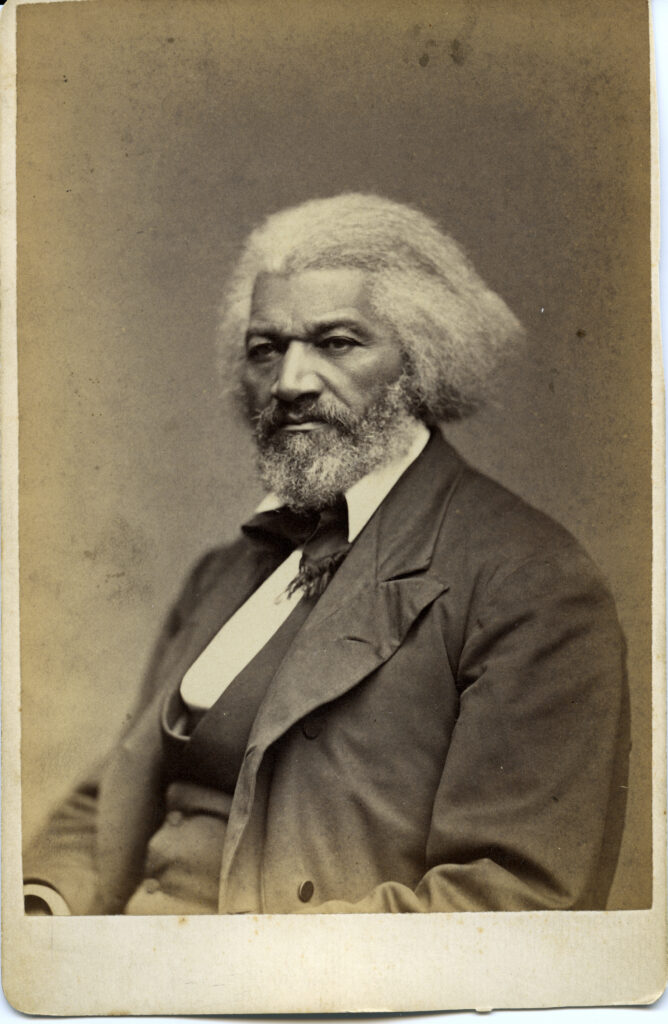
In this moment—as scholars, intellectuals, humanists, we must not sit back and allow the hatred of others to define what this idea of democracy is or is not. We must continue to tell the painful truth in the same manner that Frederick Douglas did in his hometown of Rochester, NY in 1852 when he confronted his neighbors with a critical reflection on the nation’s founding in his speech, “What to the Slave is the Fourth of July?”
Yes, we celebrate the founders of this nation and the courage of all those who bled and died for this republic. However, if at the core of who we are as a nation are the principles of equality and liberty, then we must grapple with the unequal treatment that millions of our neighbors have endured since before 1619.
These same neighbors whose blood and sweat are buried in this soil; these same neighbors whose children and grandchildren built our cities, farmed our lands, and defended our nation at home and abroad. We must tell their stories—with all of the blemishes and the imperfections—in the same manner that a blues or gospel singer reaches deep in their soul to share the pains of the past, while offering the hopes of a tomorrow that perhaps will never come.
As scholars—Bishop Henry L. Morehouse’s and W. E. B. Du Bois’ talented tenth, it is our charge not to wilt in this moment but to tell the story of the least of these, and to continue to push this nation to in the words of Rev. Dr. Martin Luther King, Jr.: “be true to what you said on paper.”
So, on the cusp of the 250th anniversary of America, my sight shifts towards the Tercentenary. Only God knows my whereabouts in 2076; however, if I am still in this present form and of sound mind and body, I hope to be able to share a story of overcoming. Overcoming the otherism that, unfortunately, this nation was built upon, and moving beyond weaponizing our differences to embrace our uniqueness. I hope that we will finally address the American Lie, which James Baldwin so poetically identified as the falsehood that asserts that black folk are not human and thus are not endowed by the Creator with unalienable rights.
I hope that the words of Douglass’s “What to the Slave is the Fourth of July” serve as a reminder of who “we” desire to be. I hope, at 96 years old, I would be able to look at my daughters who will be in their fifties and tell them that we overcame—just like as our ancestors overcame the transatlantic slave trade, three hundred years of slavery, sixty-nine years of segregation, fifty years of economic segregation—that we overcame all of the social and racial policies of a MAGA movement that attempted to remove us from this national story.
I hope that when I talk to my grandchildren about that I am able to say—thank God, you will never know that type of racism or otherism. I hope that finally, we will able be able to say with pride and confidence, that “America [finally] is American to me.”
Reginald K. Ellis, PhD is Dean of Graduate Education at Clark Atlanta University.