The Attack on “US” Continues
A lie told once is questioned. A lie repeated often enough becomes accepted. And once it becomes ‘common sense,’ people stop investigating it. That is how deception survives.
Malcom X
The Supreme Court’s 6-3 decision in Louisiana v Callais brings clearly into focus the long-standing strategy of limiting the voice, the representation, and the humanity of marginalized folk in this nation. With this blow to the Voting Rights Act of 1965, fair-minded folk must remember that this attack is not new—and will not end with this decision. What began with an attack on “Wokeism” and spread to anti-“DEI” policies has now appeared at the polling place.
The intentional dehumanization of black folk by the federal government, or what James Baldwin called “The Lie,” is now being reconstructed by mainstream conservatives as “Woke Ideology.” Yet The Lie is evolving to assert that the past does not reflect the present or point to the future of the nation. It provides cover for the six aristocratic justices to opine that race should no longer be a factor when drawing congressional districts. Now, the representation of political parties however has more influence than people themselves. The Lie that these justices told themselves and Americans broadly inform us that race, from a voting perspective is a social construct that no longer has merit when legally gerrymandering congressional districts. The representation that matters for these new-aged white supremacists now speaks deeply about their political and economic assumptions more than it speaks to their racial ideology.
The falsity of the Court’s conclusion that race doesn’t matter in American life is best highlighted in the wealth gaps between black and white folk today. In 2026, the median net worth for white households is approximately $284,310, compared to just $44,100 for black households. For every dollar that white families have, black families have 15 cents. To crystalize how skewed the racial gap remains, the top 80% of all black households own less than the median white household.
Overlooking all of these realities, the Court leaves us with a crucial question: where are our representatives? Where are the folk who, from this socio-economic perspective, will take into account the lives of our community, people who work in our districts, who send their kids to our schools and who understand our needs?
The logic of Louisiana v Callais is not new in American life. Carter G. Woodson called it “Mis-Education.” Writing in the early 1930s, Woodson warned Americans, “If you can control a man’s mind you don’t have to worry about his action, you don’t have to tell him to sit here or go yonder. … He will go without being told … his education makes it necessary.”
Even before Donald Trump returned to the White House for a second term, the Republican party had begun attacking remembrance of the black experience in America. In January 2023, Florida Governor Ron DeSantis declared that an Advanced Placement course in African American history “lacks educational value.” Over the past three years, Trump has criticized the Smithsonian’s National Museum of African American History and Culture, and scholars of the black experience have been silenced, defunded and intentionally blotted out. The Trump administration has strategically removed mention of black history and the inclusion of black and other marginalized folk from federal websites, museums, and national parks.
Louisiana v Callais is another form of historical erasure. In eviscerating section 2 of the Voting Rights Act, which permitted legislators to consider race when redrawing districts and thus safeguarding black political representation, the Court ignored the lengthy struggle for rights that, for the first time in this American experiment, made black folk whole citizens.
How the 1890 Mississippi Constitutional Convention Provided a Roadmap for Louisiana v Callais
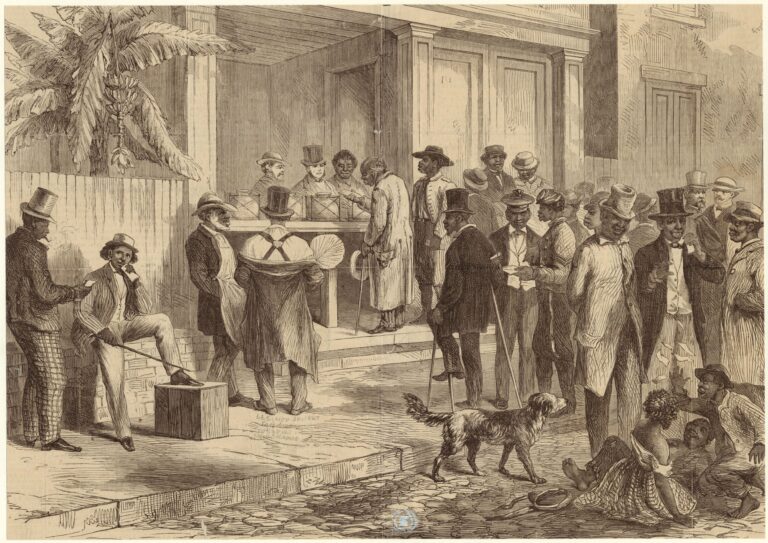
It is important to highlight what the justices want us to forget. The 15th Amendment, ratified in 1870, protected all male citizens from any infringement on their voting rights “on account of race, color, or previous condition of servitude.”
The first major attack on black voting rights took place in 1890 in Mississippi, when 100 delegates to the state convention—ninety-nine white men and one African-American, Isaiah T. Montgomery—to effectively disenfranchise the great majority of black folk in the state by implementing poll taxes, subjective literacy tests, and imposing restrictive residency requirements.
Other southern states, including South Carolina and Oklahoma, adopted similar provisions with the passage of the Eight Box Law, a measure intended to deceive and disenfranchise black voters by disqualifying ballots that were placed in the wrong ballot box.
Finally, in 1898, Louisiana, where section 2 of the Voting Rights Act was just struck down, passed the “Grandfather Clause,” which afforded poor, illiterate, white men new voting rights, while “legally” disenfranchising black men, regardless of socio-economic status.
Highlighting the impact of these regressive voter registration laws — following the passage of the Mississippi Constitution of 1890, South Carolina’s “Eight Box Law” and Louisiana’s Grand Father Clause, black voter registration plummeted from roughly 130,000 in 1890 to nearly 1,300 in in the state of Louisiana
Despite these legal barriers, black folk remained active in their quest to secure their voting rights. Historians, journalists, artists, and theologians have all documented the struggle of the Long Civil Rights Movement—and how that movement moved America closer to the ideals found in the Declaration of Independence. Yet this victory of inclusion, a true seat at the table of Democracy via the vote and representation, was not one that was given. It was fought for, in battles that stretched for decades and that claimed innumerable lives to ensure We the People was a true statement for all.
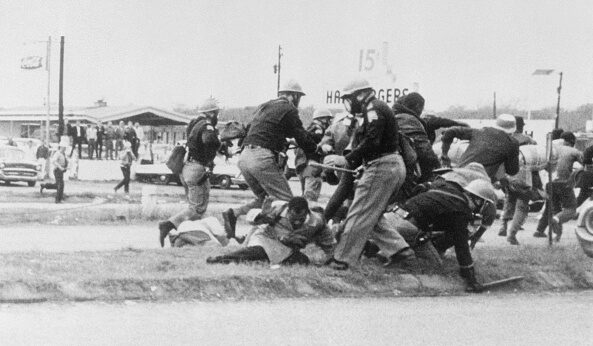
Today, even mentioning Bloody Sunday, the march held in 1965 in Selma, Alabama where law enforcement officers brutally attacked and beat 600 people on the Edmund Pettus Bridge simply for protesting to register to vote, will lead to reprimands from state and federal politicians and funding agents who claim that this historic episode is “Woke ideology.” Rights that were secured in the 1950s and 1960s for black folk and all underrepresented minorities are being systematically unraveled under the claim that these very laws benefit the marginalized over the majority.
This systematic attack permeates the policy space. From voting rights, to medical access to freedom of speech and expression, all of these measures are being challenged and branded as Woke—without any real definition or counter argument. Rather than campaign on the traditional small-government platform of the old G.O.P., this new autocratic approach has quickly eroded the social safety net that was hard fought for and won nearly sixty years ago.
For example, Florida Governor Ron DeSantis and his allies recently launched a United States History Course that attempts to rival the Advanced Placement US History course. The stated goals of this course are to “limit ideological bias or indoctrination.” Yet it pushes the erroneous idea that black folk “personally benefited” from the institution of slavery due to the trades they were forced into under the system of slavery.
Also, this new course amplifies the conservative principle that no student should be made to “feel guilt, anguish, or other forms of psychological distress,” based on actions committed in the past by members of their race or sex. Thus, while the Supreme Court’s ruling removes the heart of the Voting Rights Act of 1965, state lawmakers are busy passing educational measures to ensure that the protest we lived through during the summer of 2020 won’t occur because the educated “white woke liberals” from the Ivory Tower will, in theory, no longer have access to the actual historic record of the United States.
Consequently, millions of our young people will be deprived of learning the true greatness of what a Democracy can truly become—a government of the people, by the people and for the people—the government that the founders may have envisioned 250 years ago. Sadly, as we stand today, with several southern states redrawing congressional districts to remove minority districts, we should brace ourselves for what’s next. If past is prologue, the attack on voting and education is only the beginning. Fair banking, fair housing, and other arenas of discrimination are on deck. Yes, the Attack on Us continues.