The State of Islamophobia
Fantasy, Projection, and the Remaking of the Post-9/11 Social Contract
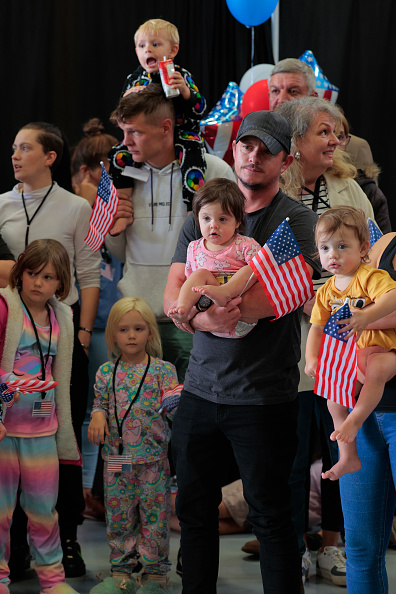
Twenty-five years after 9/11, grassroots democracy is alive and well in America. On that fateful day, against the shocking backdrop of the smoldering Twin Towers, the future of the US seemed to hang in the balance. Would the country’s institutions withstand the challenge?
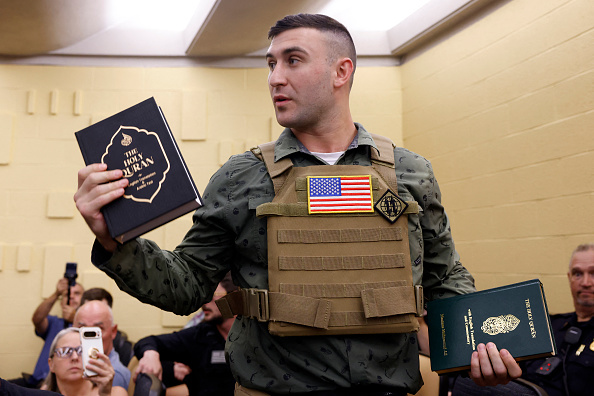
Today, school boards, zoning commissions, town halls–the building blocks of the country’s 250-year-old democracy—are hubs of civic engagement. Enthusiastic citizens take to the microphone in towns big and small to steer the machinery of state toward the people’s will. They demand that the government act in the interests of the nation. Politicians are called to account. They invoke founding fathers, American freedoms, the Constitution—and the Bible.
In a growing number of such meetings, what these engaged citizens want in 2026 is to activate the state to “protect” them from their Muslim neighbors. This is not an impulse that one typically associates with liberal democracies. But the post-September 11 social contract has been reimagined. Muslims make up just over 1 percent of the US population. But a diverse and sizeable coalition of political actors and institutions have placed them—or more accurately, a distorted image of them—at the center of American civic life. This is one of the most significant legacies of the US response to the attacks of 9/11: the US national security state has trained Americans to seek protection from Muslims as a singular kind of threat.
After 9/11, the US went to war against “terrorism,” though it was always made explicit that the targets were Muslim. The only question was whether they were, to paraphrase Mahmood Mamdani, the “good” ones or the “bad” ones, and the former (the secular, Westernized, US-allied ones) always seemed to be in short supply. Americans embraced militarism, the US surveillance state swelled, police powers expanded and became more militarized, and the country went to war in Afghanistan, Iraq, Pakistan, Yemen, Libya, Syria, Somalia, and Iran (plus covert counterterrorism operations in dozens of other countries). It also acted in concert with NATO countries and its regional proxy, Israel, which has waged what its leaders call a “six-front” war for much of this period—and, since, 2023, committed genocide in Gaza. Throughout, Israel enjoyed the bipartisan support of both political parties in the US and the steady backing of Evangelical Christians.
Guaranteeing a high degree of support for the “global war on terror” and its successors, the media and entertainment industries tweaked their catalogue of villains (they had already begun featuring Middle Eastern Muslims in the 1990s as the USSR receded from public consciousness). War was good for business. The profits of the arms industry, gradually fused with Silicon Valley, exploded: military spending went from $531 billion in 2000 to over $1 trillion in 2025. Including various supplemental funds, the Costs of War Project concludes “the U.S. military budget has nearly doubled this century, increasing 99% since 2000.”
The official rationale for this quarter-century of war in Muslim countries has stressed the security of the American “homeland”—to use a term popularized after 9/11. At moments, it was also about “freeing” women from the Taliban, which most people in the US tended to conflate with Islam writ large. This war was “good,” in a framing attributed to Barack Obama, because it had something for the right and the left. It was getting the bad guys “there” before they could attack us “here,” but with a feminist touch. American audiences derived a special satisfaction from watching the daring CIA heroines of Zero Dark Thirty (2012) and Homeland (2011-2020) punish Muslim brutes.
The war also promised democracy—until the American sponsors of elections soured on their clients. Hidden enemies, dead villagers, roadside explosions, suicide bombers, chaos, corruption, dust, blood, heat, suffering—these theaters of war were, by 2021 and the American withdrawal from Afghanistan, seemingly beyond redemption. The Iran war would be different. It would be fought from a distance with AI-guided missiles and sanctions aimed at collapsing Iranian society and, with it, the government.
Beginning in the 2010s, a chorus of critics, including Donald Trump, called for ending these “forever wars,” but American elites have not yet lost their appetite for waging war in this geography. They are not sure how to define their “interests” in the world, and military engagements are expensive and risky.
Yet this inertia also creates a less-appreciated dilemma for democratic politics in the US and elsewhere. Decades of killing Muslims abroad has left an indelible mark on American views of Muslims everywhere, undermining the possibility of seeing Muslims as anything but foreigners and enemies. It poses a dire threat to the very idea of citizenship.
Recent polling shows that perceptions of Muslims are far more negative now than they were immediately after September 11, when the number of hate crimes against Muslims soared: the Pew Research Center found that in March 2002 25% of American adults thought that Islam encourages violence more than other religions. The number of Americans who associated Islam with violence grew over time. By early 2026, 51% of those polled held this view. And 42% believed that Muslims have a “very or somewhat negative” impact on the county.
At least two generations of eloquent and insightful scholars—from Edward Said to Khaled Beydoun to Rozina Ali—have investigated “Islamophobia” as a central feature of political life in the US and in the West, in general, that predated 9/11 and metastasized in its aftermath. They have pointed out that the term Islamophobia encapsulates not just exaggerated fear, but hatred. Although “Islam” makes up the core of the label, the phenomenon goes far beyond religious antipathy or a kind of sectarian competition inherited from the ancient world. As a way of mapping racial difference, it is more about a whole range of mental images, fantasies and the attribution of irrationality, savagery, backwardness, misogyny, unbridled sexuality (but also sexual repression), and hatred of all things non-Muslim, often framed, above all, as endemic antisemitism.
The danger posed by Muslims in the minds of so many Americans is compelling because it is diffuse, multi-faceted, sensationalist, and emotive and draws upon numerous cultural, racial, and religious references. If one listens to recent town hall voices, one learns that Muslims are objectionable because they supposedly debase women. They impose the veil. They marry off little girls to old men. They refuse to accept Christ as their Lord and Savior. They are racial others. Most alarmingly, they want to “take over” and impose their customs, values, and laws: “sharia.” As Trump put it in March 2016, “I think Islam hates us.”

The migration and forced displacement of millions resulting from the post-9/11 wars have complicated the picture further. For many publics in the West, these distant wars were always religious, even “civilizational” clashes, and now they have been brought home. The much-publicized and sensationalized refugee crisis of 2015 in Europe raised alarms—less about the conflicts seeded by European powers in the Middle East—than about the arrival of large numbers of Muslims, especially young men. The panic prompted by Muslim migration in the West has provided politicians with an opportunity to stoke and mobilize an entire constellation of fears. From grooming gangs and burkinis on the beach to halal school lunches and asylum housing, brown and black Muslims epitomized all that was alien and terrifying. In Europe, too, where Muslims make up just 6% of the population, Islamophobia has become an anchor of the social contract.
The European right has been the most explicit about targeting Muslims in calling for militarized borders, more restrictive criteria for citizenship, an end to asylum, and mass deportations, warning of a migrant “invasion,” “terrorism,” “criminality,” and “welfare fraud.” But centrist parties have not been shy about capitalizing on the stigmatization of Muslims. German Chancellor Friedrich Merz, for instance, has even gone so far as permitting the Taliban to operation diplomatic missions in German in exchange for cooperating on the deportation of Afghans. Rhetoric that dehumanizes and criminalizes immigrants has long been a mainstream phenomenon. A transnational ecosystem of right-wing activists and influencers amplifies these messages online. Globally, since 2023, the Israel-Palestine conflict has become a kind of stand in for the assault of “Islam” on “the West.”

Across the globe, states have made “protection” against “enemy” populations—Muslims, migrants, and others—an increasingly central aspect of the social contract. This practice affirms the public view that such threats are real, offering cover to actors who imagine their actions as affirming (and acting in accordance with) state policies. In the US, against the backdrop of constant war and negative media imagery, travel bans targeting Muslim countries, surveillance of Islamic centers, and the prosecution of protestors against the Gaza genocide are only one way the state leads.
Elected representatives increasingly make the appearance of combating Islam the focus of state and local governance, a move that shows how much contemporary Islamophobia relies on fantasy and projection. In 2025, two Texas congressmen founded the “Sharia Free America Caucus,” calling their work a “noble cause to save Western Civilization and fight back against the threat of Sharia.” More than two dozen of their colleagues joined the group, including another Texas representative, Brandon Gill, who explained, “Sharia Law is utterly barbaric and has no place in America whatsoever. My constituents in Texas are constantly expressing their concern and asking what can be done about the rise of mass Islamic immigration in north Texas, including developments like the East Plano Islamic Community. If people come to America in search of a better life, they need to be prepared to assimilate to our culture, not impose third world ideals into our society.”
In February 2026, their colleagues in the Senate introduced “the Defeat Sharia Law in America Act.” Its sponsor, Texas Senator John Cornyn, explained that it was meant “to ensure anti-American jihadists and those who dare to try and implement Sharia Law’s hateful ideology in our freedom-loving, God-fearing communities are stopped and held accountable for their radical discrimination and flagrant violation of our Constitution.” His co-sponsor, Tommy Turberville of Alabama, added that “Sharia Law is not a religion; it is a death cult and has no place in this country … People are afraid to call out Sharia Law for what it is: an ideology that calls for the killing of freedom-loving Americans. We have to take action against this poisonous ideology and protect Americans from the growing threat of Radical Islam.”
Also, in Tennessee, a republican candidate for governor pledged to ban mosques and other places of worship tied to “pagan religions,” and Tennessee representative Andy Ogles announced on social media that “Muslims don’t belong in American society.” On the eve of the twenty-five-year anniversary of 9/11, Florida Congressman Randy Fine commented on commemoration of the event: “For Jihadi Mamdani, the 25th anniversary of 9/11 is not a tragedy. It is a celebration of people who shared his horrific worldview and murdered 3,000 Americans. His presence there is a disgrace. His presence in this country is an even bigger one.”
Framing Muslims as followers of “an ideology that calls for the killing of freedom-loving Americans” has become a common refrain of MAGA rhetoric, especially among its Evangelical base, but, as many scholars of Islamophobia have pointed out, treating Muslims as a collective threat is not limited to the political right.
In solidly Democratic Northern California, a multi-religious coalition of parents in affluent Palo Alto have filed a lawsuit against a school district, arguing that a field trip to a mosque violated students’ constitutional rights and that the school failed to protect students from “the foreseeable risk that students would be exposed to religious activity and ideological messaging.”
In nearby Los Gatos, neighbors of a mosque in a residential neighborhood are in an intense zoning battle. Residents complain about parking, traffic, noise, and headlights shining into houses—but members of the mosque community contend that these technicalities are a pretext to deny them their rights. Similar battles over mosque construction and expansion are underway in jurisdictions across the country.
The discriminatory scapegoating of Islam and Muslims is happening at all levels of government and is threatening essential civil rights and the country’s democratic principles—but it also legitimizes violence. As Mohamad Bazzi has pointed out, Trump’s repeated threats to completely destroy Iran, by “bombing it back to the Stone Ages,” warning “a whole civilization will die tonight,” and recently saying it would be “totally wiped out as a country” if it did not comply, are normalizing mass violence against Iranians and others. “As they did with Gaza,” he writes, “most western powers and leaders have become numb to the loss and suffering of Palestinians, Iranians, Lebanese and others in the Middle East.”
The notion that Muslims are inherently violent—and thus must be opposed and met with force—has taken on a more explicitly Christian coloring in the language of powerful figures such as Secretary of War Pete Hegseth and Vice President JD Vance. Long before he helped to launch the war in Iran, Hegseth warned that “Islam will never stop being at war” and has called for the launching of “an American crusade.” Attacking Abdul El-Sayed, the Democratic candidate running for the Senate from Michigan, Vance recently remarked that “There’s something about Abdul El-Sayed that is very, very evil and on the rise in the United States of America today.” “What I see,” the vice president continued, “is a man who has sympathy and compassion for people who share his religion, but have nothing for people who don’t. A person who will apologize for a murderer so long as he looks the right way, but will not understand the plight of an innocent child if that person has the wrong faith.” Conflating Islam and the murder of non-Muslim children, Vance’s mastery of the art of projection is impressive—but also very dangerous.
Some of the effects of the interplay of interminable wars abroad and domestic scapegoating can be seen in the manifestos of mass shooters who have attacked mosques and synagogues. In the May 2026 assault on the Islamic Center of San Diego, two teenagers murdered three people, leaving behind writings that celebrated the 2019 Christchurch mosque shooter in New Zealand who killed 51 people. His manifesto, in turn, praised the Norwegian killer Anders Breivik, who murdered 77 people in 2011. Antisemitism, Islamophobia, anti-immigrant hatred, white supremacy, and a belief in the “great replacement” conspiracy are among the ideological elements that recent (and would-be) mosque- and synagogue-shooters share in common.
That there is extensive overlap between the language and aspirations of mass shooter manifestos and leading politicians in the West when it comes to Islam and Muslims should prompt more reflection on what the wars of 9/11 have done to our political vocabulary—and how we imagine citizenship and the social contract. Finally bringing an end to the forever wars, militarism, and Islamophobia will mean rethinking the entire political trajectory we have followed for the last quarter century.
Robert D. Crews is professor of History at Stanford University.